

Most people walking into a kitchen showroom in India know they need a chimney. What they don’t know is which one to get and why. The salesperson throws around words like “suction capacity” and “baffle filters.” Everyone nods politely. Most walk out and buy whatever fits the budget or looks good in the brochure. That’s how most chimney decisions get made. It’s also why many kitchens end up with the wrong type, and why chimney service in Bhubaneswar gets searched for every other week by someone whose chimney isn’t doing what it’s supposed to.
Wall-mounted, island, and built-in are the three main types, and here’s what each one actually means for your kitchen, your cooking, and your daily life.
Why the Type of Chimney Matters More Than You Think?
The type of chimney you pick matters more than most people realise, and here’s why. Indian cooking is heavy. A simple lunch can involve tempering, frying, and open-flame cooking within thirty minutes. The smoke, oil mist, and odour produced by that process are significant. A chimney that isn’t suited to your kitchen layout will always struggle, no matter how powerful the motor is.
The type of chimney determines where it sits, how air flows into it, and how well it covers your cooking area. Choose the wrong type, and even an expensive chimney will underperform.
Which Type of Kitchen Chimney Is Best for Indian Homes: Wall-Mounted, Island, or Built-in?
The best chimney depends entirely on your kitchen. Here’s how each type works:
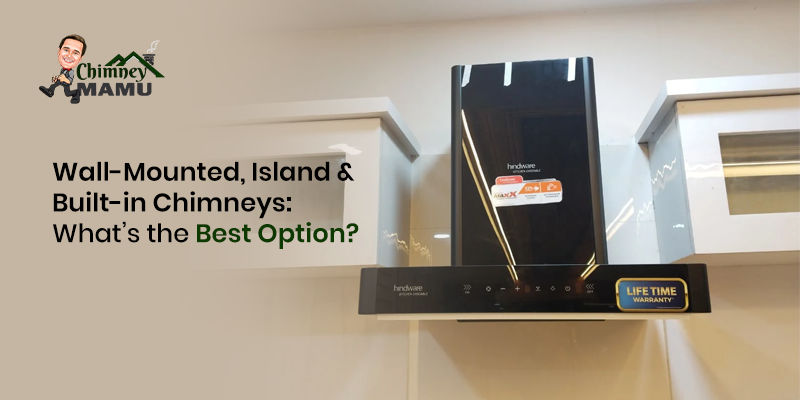
- Wall-mounted chimneys are the most common type in Indian homes. They fix directly to the wall above the stove, with the canopy sitting in full view. Most come in 60- or 90-cm widths to match standard cooktops. They’re simple to install, easy to maintain, and well-suited for heavy Indian cooking. If your stove sits against a wall, this is the one to go with.
- Island chimneys hang from the ceiling above a cooking island or central counter. They look striking and work well in open-plan kitchens. The trade-off is that they need a stronger motor since there are no walls to help contain rising smoke. They also require ceiling ducting, which increases installation effort.
- Built-in chimneys are integrated into kitchen cabinets so that only a slim panel is visible. They suit modular kitchens well, run quieter than the other two types, and keep the kitchen looking clean without a canopy taking up visual space.
Picking the Right Chimney for Your Kitchen Layout
Before comparing prices or designs, ask yourself: How do I choose the right chimney design based on my kitchen layout? The answer to that one question narrows everything down. A few things to consider:
- Where is your stove? If it’s against a wall, wall-mounted is the natural fit. If it’s on a central island, you need an island chimney.
- How much space do you have? Compact kitchens with limited wall and ceiling space benefit from built-in models that tuck into existing cabinetry.
- What does your kitchen look like? Open-plan kitchens with high ceilings suit island chimneys. Modular kitchens with clean lines suit built-in ones. Traditional kitchens suit wall-mounted ones.
- How much do you cook? Heavy daily cooking needs strong suction and easy-to-clean filters. This matters more for wall-mounted and island types.
Once you’ve figured out which type works for your kitchen, leave the installation to a professional chimney service in Bhubaneswar, and we will get it right the first time.
Is a Built-in Chimney Worth It for Small Kitchens, or Should You Go with a Wall-Mounted One?
This is a common dilemma, particularly for apartment kitchens. Built-in chimneys work really well in small kitchens because they don’t take up visual space. Since they sit inside the cabinet, there’s no canopy jutting out into the room. The kitchen feels less cluttered.
Wall-mounted chimneys, on the other hand, are more visible, provide stronger suction, and are easier to service. If your household does heavy frying and tempering daily, a wall-mounted chimney with a strong motor will serve you better in the long run.
So it really comes down to how you cook. Light-to-moderate cooking in a compact kitchen? Built-in is a genuinely good choice. Heavy daily cooking where performance matters more than looks? Wall-mounted is the safer bet.
Worth noting: kitchens without proper ventilation can accumulate indoor air pollution at levels significantly higher than outdoor air. Over time, that affects not just the surfaces in your kitchen but also the air everyone in the house breathes.
Do Island Chimneys Require More Maintenance Compared to Wall-Mounted Ones?
Generally, yes. Island chimneys sit in open space, so they draw in air from all directions. That’s good for coverage, but it also means the filters work harder and accumulate grease faster. The motor tends to run at higher speeds more often because there’s no wall to direct the airflow. Wall-mounted chimneys have a more contained setup. The wall behind the stove helps channel smoke upward toward the hood, so the chimney doesn’t have to work as hard to capture everything.
This doesn’t mean island chimneys are particularly high-maintenance. It just means the filter needs cleaning more regularly, and the motor needs a check during servicing. For most households with an island kitchen, that’s a reasonable trade-off for the layout and the look.
The Installation Part Matters More Than You Think
Choosing the right chimney type is only half the job. Installation matters just as much. A wall-mounted chimney at the wrong height loses suction. An island chimney with poorly routed ducting creates noise. A built-in chimney without proper cabinet clearance overheats. Which brings up a question most people ask at this point: where can I find reliable chimney service in Bhubaneswar for installation and cleaning? Chimney Mamu handles it all, from the initial setup to filter cleaning, motor checks, and duct inspections.
So, Which One Should You Pick?
Wall-mounted works for most Indian kitchens. Island suits open-plan layouts with central cooking counters. Built-in is the right call for compact, modular kitchens where looks and space matter. All three do the same job. The right one depends entirely on where your stove is, what your kitchen layout is, and how heavy you cook.
Once you’ve figured that out, Chimney Mamu offers professional chimney service in Bhubaneswar, from installation to regular maintenance. Reach out to get your kitchen chimney sorted.
Frequently Asked Questions
- Which chimney type saves the most space: wall-mounted, island, or built-in?
Built-in chimneys save the most space since they integrate directly into your kitchen cabinets, making them ideal for compact or modular kitchens.
- Which chimney type is easiest to install?
Wall-mounted chimneys are the easiest to install since they simply fix to the wall above the stove without requiring ceiling work or cabinet modifications.
- Does an island chimney work as well as a wall-mounted or built-in one?
Island chimneys work just as effectively as wall-mounted and built-in options, but they need a stronger motor because they operate in open spaces without walls to contain and direct rising smoke.